


Complete Water Well Drilling Solutions for Groundwater Projects
A complete water well drilling system combines a rig, an air compressor for air-powered DTH drilling or a mud pump for mud rotary drilling, and matched rods and drilling tools. Select the package by target depth, borehole diameter, geology and site conditions. Start with our water well drilling rig range, then provide your project conditions so the equipment can be matched to the actual drilling requirements.
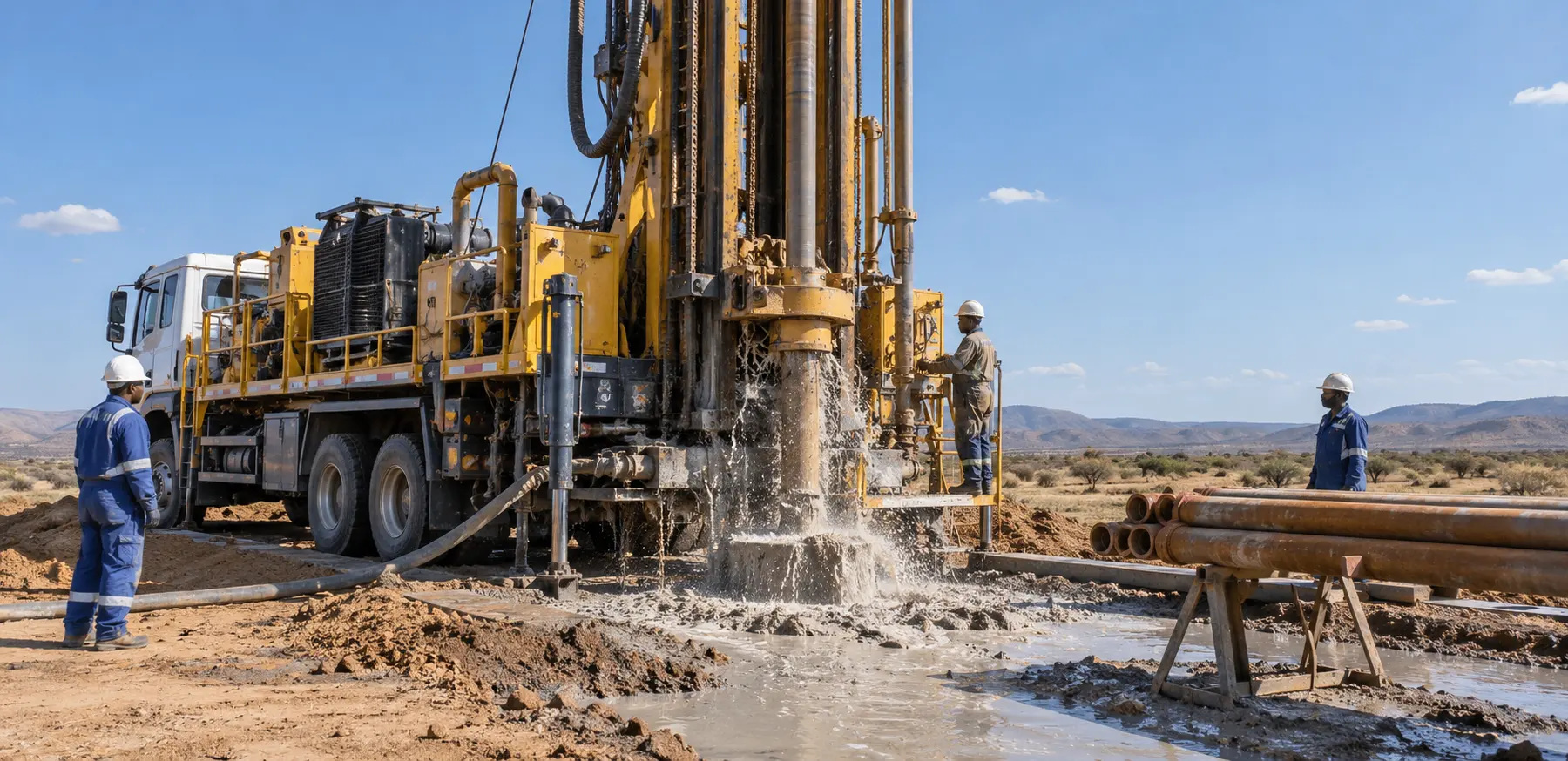
Common Challenges in Water Well Drilling Projects
- Geological conditions ranging from soft soil and sand to fractured or hard rock
- Different drilling depths and borehole diameter requirements
- Choosing the correct drilling method for the formation
- Matching the drilling rig with the correct air compressor or mud pump
- Selecting suitable drill rods, drill bits and supporting tools
- Site access, terrain, transport and working-space limitations
What Equipment Is Needed for Water Well Drilling?
A complete water well drilling system usually combines the drilling rig with the supporting equipment required by the drilling method and borehole design. The exact equipment package depends on depth, diameter, geology and operating conditions.
- Water well drilling rig: selected according to drilling depth, borehole diameter, mobility requirements and drilling method.
- Air compressor: required when the selected DTH drilling system uses compressed air. See our water well drilling air compressor selection guide for pressure and airflow matching.
- Mud pump: used when drilling-fluid circulation is required for the selected drilling method.
- Drill rods and drilling tools: matched to the borehole diameter, formation and drilling method.
- Spare parts and project-specific accessories: confirmed according to the final equipment package and operating conditions.
The key point is that the rig, compressor or mud pump and drilling tools should be evaluated together. A machine that has sufficient rated drilling depth may still be unsuitable if the drilling method, tooling or supporting equipment does not match the actual site conditions.
How to Match a Water Well Drilling System to Your Project
Before comparing drilling machines, define the main project conditions first. Feiyang reviews these inputs together so the drilling rig, compressor or mud pump, drill rods, drill bits and supporting equipment can be configured as one workable water well drilling system.
- Target drilling depth – determines the basic capacity required from the drilling rig.
- Borehole diameter – affects drilling tools, power requirements and overall equipment configuration.
- Geological formation – soil, clay, sand, gravel, fractured formations and hard rock may require different drilling methods and tooling.
- Drilling method – DTH and mud rotary drilling require different supporting equipment.
- Site access and terrain – working space, road conditions and transportation limits affect machine structure and mobility requirements.
- Existing equipment – an available compressor, mud pump or drilling tools may affect the final package.

DTH vs Mud Rotary Drilling: Which Method Fits Your Project?
DTH drilling is commonly considered for competent or hard-rock formations where compressed air and a down-the-hole hammer are suitable for breaking the formation. A DTH water well drilling system normally requires the drilling rig, air compressor, DTH hammer, drill bits and rods to be matched together.
Mud rotary drilling may be considered where drilling-fluid circulation is suitable for the expected geological conditions and borehole design. In this type of system, the drilling rig, mud pump, rods and drilling tools should be selected as one package.
Neither method should be selected only by drilling depth. Geological conditions, borehole diameter, available supporting equipment and the overall project requirements should also be considered. When geology is uncertain, nearby borehole records or available geological information can help with equipment selection.
Choose Water Well Drilling Equipment by Rig Type
Different projects require different rig structures and mobility options. Equipment type should be selected according to site access, terrain, drilling method, transport requirements and the target borehole. Read our crawler, truck and trailer water well drilling rig comparison to assess site mobility and transport arrangements.
For compact or restricted-access projects, review the SJ-300 portable water well drilling rig. For projects with different mobility and drilling-method requirements, compare the JDL-280 top-drive drilling rig and the FY-350 crawler water well drilling rig. Product parameters and final configuration should always be confirmed against the current quotation and actual project requirements.
For a broader comparison of available models and rig structures, see the full water well drilling rig range.


Where Water Well Drilling Equipment Is Used
Water well drilling equipment can be configured for agricultural irrigation, community water supply, commercial boreholes, industrial groundwater projects and other groundwater-access applications.
The suitable drilling rig and supporting system depend on the target depth, borehole diameter, geological formation, site access and drilling method. For this reason, the same equipment configuration should not automatically be assumed to fit every project.
Engineering, Delivery and Equipment Support
Equipment selection is only one part of a water well drilling project. Before dispatch, the drilling rig, supporting equipment, drilling tools, spare-parts scope and shipping requirements should be confirmed together. This helps keep the delivered equipment package consistent with the agreed project configuration.
See our delivery and service support page for information about the support workflow and preparation before equipment dispatch.
What Information Should You Send for an Equipment Recommendation?
For a practical water well drilling equipment recommendation, provide the main project conditions before requesting the final quotation.
- Destination country, project location and delivery port or inland destination
- Target drilling depth
- Required borehole diameter
- Expected geological formation
- Preferred drilling method, if already known
- Site access, terrain, transportation restrictions, altitude and operating temperature range
- Existing air compressor, mud pump or drilling tools already available
- Equipment quantity and required delivery schedule
Send your water well drilling project requirements for equipment selection and quotation review.
Water Well Drilling Equipment FAQ
What equipment is needed for a complete water well drilling system?
A complete system normally includes the drilling rig, the required air compressor or mud pump, drill rods, drill bits or DTH tools, and project-specific supporting equipment. The exact package depends on depth, borehole diameter, geology and drilling method.
How do I choose between DTH and mud rotary drilling?
DTH drilling is generally considered where compressed-air drilling and a down-the-hole hammer suit the formation, especially in competent rock. Mud rotary drilling may be considered where drilling-fluid circulation suits the formation and borehole design. The final method should be based on the actual geological and project conditions.
Can one water well drilling rig work in every geological formation?
No single configuration should be assumed to suit every geological formation. Different formations may require different drilling methods, compressors or pumps, drill bits, rods and operating settings.
What information is needed before requesting a quotation?
Provide the destination, target depth, borehole diameter, expected geology, preferred drilling method, site conditions and any supporting equipment already available. This allows the equipment package and quotation scope to be reviewed against the actual project requirements.
Need a Complete Water Well Drilling Equipment Solution?
Send your borehole depth, diameter, geological conditions and site requirements for drilling equipment selection, system configuration, quotation and support planning.