


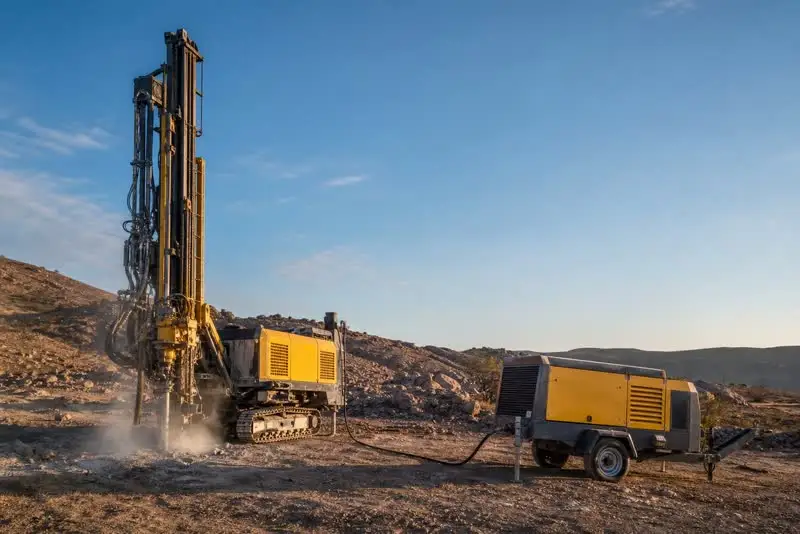
Air Compressor for Water Well Drilling Rig: Pressure & Airflow Guide (2026)
2026-07-22


An air compressor for a water well drilling rig must supply the DTH hammer with enough working pressure and enough airflow to remove cuttings. Match its continuous free air delivery at the required pressure to the hammer, hole diameter, depth and site conditions; do not size it from the rig's maximum drilling depth alone.
The correct match depends on the DTH hammer, bit diameter, target depth, formation, altitude, expected water inflow, and pressure loss through hoses and drill pipes. This guide explains a practical selection process for contractors comparing a drilling rig, compressor, hammer, and tooling as one complete system.
Need help matching a compressor to your drilling project? Send your rig model, DTH hammer model, target depth, hole diameter, site altitude and available compressor specifications.
Request a Compressor Matching Review →
Quick answer: pressure powers the hammer, airflow cleans the hole
Pressure and airflow are related, but they are not interchangeable.
- Working pressure helps the DTH hammer maintain impact energy against increasing borehole backpressure.
- Airflow operates the hammer and creates the upward velocity needed to lift rock chips, dust, and water from the annular space.
- Free air delivery at rated pressure is more useful than a maximum-flow number measured at a lower pressure.
- A practical reserve is needed for hose losses, altitude, heat, tool wear, leakage, water inflow, and changing formations.
Do not select a compressor from the drilling rig's maximum depth label alone. Start with the hole and formation, select the hammer and bit, then match the compressor to the hammer manufacturer's operating range and the real flushing requirement.
How compressed air works in DTH water well drilling
In DTH drilling, compressed air travels through the drill string to a hammer positioned directly behind the bit. The hammer piston delivers repeated impacts while the rig rotates the drill string. After powering the hammer, the air exits through the bit face and returns to the surface through the space between the drill pipe and the borehole wall.
This return airflow removes cuttings and helps keep the bit face clear. As the hole becomes deeper, wetter, or larger, the system must overcome more resistance. Worn drill pipes, long hoses, small hose diameters, sharp bends, loose connections, and restrictions can further reduce the pressure and flow that reach the hammer.
If you are still deciding whether your geology needs DTH air drilling or another method, read our DTH vs rotary vs core drilling guide before sizing the compressor.
Six inputs required before selecting a compressor
1. Target depth and normal working depth
State both the maximum planned depth and the depth used for most projects. A contractor who normally drills 120 m holes but occasionally reaches 220 m has a different duty cycle from a team drilling 220 m every day. Deeper holes generally create more pressure loss and make cuttings removal more difficult, particularly when groundwater enters the borehole.
2. Finished borehole and bit diameter
A larger borehole creates a larger annular area around the drill pipe. More air may be required to maintain sufficient return velocity and lift heavier cuttings. Provide the initial bit diameter, final bit diameter, drill pipe outside diameter, and planned casing sizes instead of stating only the finished well diameter.
3. Formation and expected water inflow
Competent hard rock is well suited to DTH drilling, but fractured zones, collapsing overburden, clay bands, and strong water inflow change the air requirement and may require casing, foam, a booster, or a combined drilling method. A nearby borehole log is one of the most valuable documents you can send to an equipment supplier.
4. DTH hammer size and operating range
The hammer is the starting point for compressor matching. Check its specified minimum and recommended pressure, air consumption at the intended pressure, bit range, connection, and lubrication requirements. Two hammers with the same nominal size can have different air consumption. Always use the current hammer data sheet rather than a generic chart.
5. Site altitude and ambient temperature
Air density falls as altitude rises, and high ambient temperature can reduce effective compressor performance. Projects at elevation or in very hot climates may need additional capacity or a model specifically rated for those conditions. Ask the compressor supplier to correct the performance data for the actual operating altitude and temperature.
6. Hose, drill pipe, and layout losses
The compressor outlet rating is not the same as the pressure available at the hammer. Long or undersized hoses, restrictive couplings, filters, check valves, and leaking joints create losses. Use the correct hose diameter, keep the air path as short and straight as practical, maintain seals and threads, and confirm that every component is rated for the working pressure.
Pressure, airflow, and power: what each specification means
| Specification | Primary function | When demand increases | Common selection mistake |
|---|---|---|---|
| Working pressure | Maintains hammer impact and overcomes backpressure | Greater depth, water inflow, harder rock, longer air path | Comparing only maximum pressure instead of rated continuous output |
| Airflow / free air delivery | Runs the hammer and lifts cuttings to the surface | Larger bit, larger annular area, deeper or wetter hole, leakage | Using flow measured at a lower pressure than the project requires |
| Engine power | Drives the compressor element at the required duty | Higher pressure and flow, hot climate, continuous operation | Assuming engine kW alone predicts usable air output |
| Receiver and controls | Stabilize delivery and regulate loading | Changing demand and frequent operational transitions | Ignoring response, protection, and operating control quality |
Many water well DTH systems use medium- or high-pressure portable screw compressors, but there is no universal pressure or airflow number that fits every hole. The hammer manufacturer's chart and a project-specific system calculation should determine the final rating.
A practical compressor matching process
- Define the project: country, altitude, depth, bit and casing diameters, geology, water conditions, and expected drilling meters per month.
- Select the drilling method: confirm where DTH air drilling will be used and whether mud rotary, casing-while-drilling, foam, or a combined method is also required.
- Select the hammer and bit: match them to the hole diameter and formation, then obtain their current pressure and air-consumption data.
- Add real system losses: account for hose length and diameter, drill pipe, couplings, altitude, temperature, leakage, and water inflow.
- Confirm the continuous operating point: verify the compressor can deliver the required airflow at the required pressure, not only reach either maximum separately.
- Check logistics and support: compare fuel use, dimensions, weight, towing requirements, service intervals, filters, lubricants, and parts availability.
- Verify the complete package: confirm pressure ratings and compatibility for the compressor, hose, lubricator, swivel, drill pipe, hammer, bit, and safety devices.
Feiyang supplies water well drilling rigs for different depths, formations, and mobility requirements. Compressor selection should be completed together with the rig and drilling tools so the pullback, torque, pipe size, hammer, and air supply work within compatible ranges.
Symptoms of an incorrectly matched compressor
| Field symptom | Possible air-system cause | What to check first |
|---|---|---|
| Hammer becomes weak as depth increases | Insufficient working pressure or excessive pressure loss | Pressure under load, hose restriction, leaks, depth and water inflow |
| Cuttings remain in the hole | Insufficient airflow or poor annular velocity | Actual flow at pressure, bit and pipe diameter, blockage, foam or flushing plan |
| Frequent rod sticking | Poor hole cleaning or unstable return flow | Cuttings at the outlet, airflow, water entry, borehole condition and operating practice |
| High fuel consumption with little speed gain | Oversized or poorly controlled compressor, or an unrelated drilling limitation | Load profile, leaks, hammer condition, bit wear and formation |
| Unstable hammer operation | Pressure fluctuation, inadequate lubrication, leakage or incompatible hammer | Operating pressure, lubricator setting, connections and hammer manual |
| Compressor overheats or shuts down | Blocked cooler, high ambient temperature, incorrect oil, poor ventilation or overload | Alarm code, filters, fluid level, cooling system and rated duty |
These symptoms can also be caused by worn bits, damaged hammers, incorrect rotation, excessive feed force, unstable formations, or operator technique. Diagnose the complete drilling system before replacing a major component.
Portable, skid-mounted, or integrated compressor?
Towable portable compressor
A towable compressor is flexible for contractors who move between sites or operate several rigs. It can be positioned for ventilation and service access, but the transport route, towing rules, hose length, and total fleet logistics must be considered.
Skid-mounted compressor
A skid-mounted unit can suit fixed or semi-fixed projects and containerized transport. It requires a suitable lifting and placement plan and may need additional protection from dust, rain, and restricted airflow.
Rig-integrated air system
An integrated package can reduce setup time and hose length, but it increases the rig's weight, complexity, and service requirements. The best layout depends on road limits, terrain, crane access, maintenance resources, and how frequently the equipment changes sites.
Review the full Feiyang drilling equipment range when comparing crawler, trailer, truck-mounted, and portable configurations.
Operating and maintenance practices that protect performance
- Inspect hoses, clamps, couplings, and safety restraints before every shift.
- Drain water and condensate according to the compressor manufacturer's procedure.
- Use the specified compressor fluid, filters, and DTH lubricator oil.
- Keep coolers and air intakes clean while avoiding unsafe compressed-air cleaning practices.
- Record pressure, temperature, fuel consumption, drilling depth, bit size, and penetration rate.
- Investigate sudden changes instead of compensating immediately with more pressure or feed force.
- Depressurize and isolate the system before disconnecting hoses or servicing components.
- Follow the compressor, rig, hammer, and hose manufacturers' inspection and replacement intervals.
Information to send when requesting a matched drilling package
- Destination country, delivery port or inland destination, site altitude, and expected temperature range.
- Normal and maximum drilling depth.
- Initial and final borehole diameters and planned casing program.
- Formation description or a nearby borehole log.
- Expected groundwater inflow and known problem zones.
- Preferred DTH hammer and bit sizes, if already selected.
- Required mobility: crawler, truck, trailer, or stationary layout.
- Existing compressor, hose, drill pipe, and tools that must be reused.
- Production target, crew experience, local service resources, quantity, and required delivery schedule.
Frequently asked questions
Can one air compressor operate different DTH hammers?
Possibly, if each hammer's required airflow and pressure falls within the compressor's continuous operating envelope and all hoses, lubricators, and connections are compatible. Check the individual hammer data sheets rather than relying only on nominal hammer size.
Is higher pressure always better for faster drilling?
No. The hammer has a specified operating range, and drilling speed is also limited by airflow, bit condition, formation, rotation, feed force, and cuttings removal. Excess pressure can increase fuel use and component stress without solving the real restriction.
Why does a compressor work well in shallow holes but struggle deeper?
Deeper drilling adds pressure loss and makes cuttings removal harder. Water inflow, worn pipes, leaks, or a restrictive hose can make the decline more severe. Measure operating pressure and review returns under actual load.
Should I select the rig or compressor first?
Define the borehole and drilling method first, then select the rig, hammer, bit, compressor, and drill string as a coordinated system. Buying one component independently can create an expensive mismatch.
What is the most important number on a compressor quotation?
There is no single number. Confirm the continuous free air delivery at the required working pressure, corrected for the actual site conditions, along with duty rating, fuel use, protection systems, service support, and transport requirements.
Match the complete drilling system before you buy
The right air compressor for a water well drilling rig is not simply the largest unit in the budget. It is the compressor that operates the selected hammer, cleans the planned hole at the target depth, performs reliably in the site environment, and can be transported and maintained locally.
Send Feiyang your depth, bore diameter, geology, altitude, hammer size, and mobility requirements through our contact page. Our team can recommend a configuration covering the drilling rig, compressor capacity, DTH hammer, drill pipe, and supporting tools.