


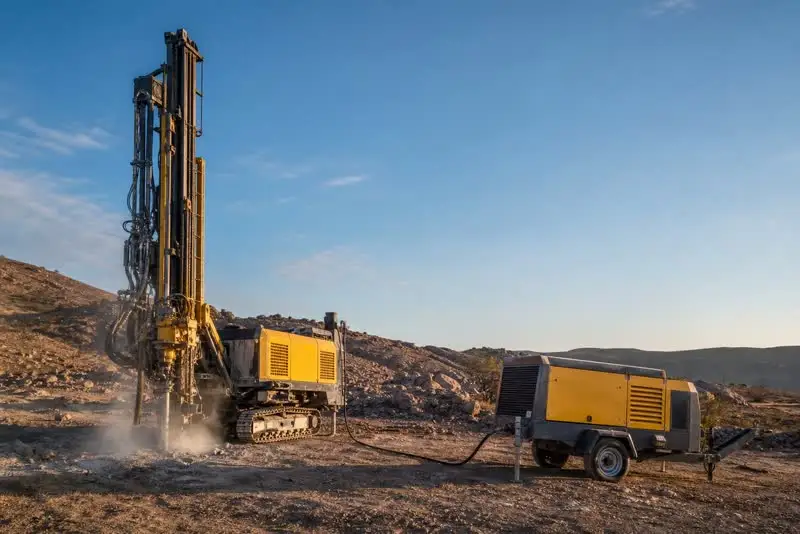
Deep Water Well Drilling Rig for 300 m Projects: A Buyer’s Guide
2026-07-29


At 60 metres, choosing the wrong drilling rig is inconvenient. At 300 metres, it becomes expensive.
Every extra rod adds friction, weight and time. A formation change that looked minor in the bore log can slow penetration, increase air demand or make the drill string harder to recover. That is why buyers planning commercial, municipal, mining or industrial wells should not choose a deep water well drilling rig from a depth number alone.
The real question is whether the complete drilling system—rig, compressor or mud pump, drill rods, hammer, bits and support equipment—can finish the required borehole reliably under the actual site conditions.
Why deep drilling changes the buying decision
A machine may reach its stated maximum depth in favourable ground, but a professional contractor rarely wants to operate at the limit on every hole. Deep projects bring together several loads at once:
- the increasing weight of the drill string;
- friction between rods, cuttings and the borehole wall;
- the need to clean a deeper and sometimes larger hole;
- higher recovery forces if the formation collapses or tools become stuck;
- longer working cycles that test the hydraulic and cooling systems; and
- more expensive downtime when the rig is far from parts and service support.
A sensible specification therefore includes a working margin. If most contracts are between 220 and 260 m, a 300 m-class rig may be a better business tool than a smaller machine that can only reach that depth under ideal conditions.
Start with geology—not the machine catalogue
Two wells of the same depth can require very different equipment. A 250 m hole through competent granite is not the same job as a 250 m hole through clay, sand, gravel and fractured layers.
Hard, competent rock
Down-the-hole (DTH) drilling is often the productive choice in hard rock. The compressor must deliver the pressure and airflow required by the hammer, bit diameter, depth, altitude and expected water inflow. An undersized compressor can make a capable rig look slow; an oversized package adds fuel use and transport cost.
Loose or unstable overburden
Mud rotary drilling can support the borehole wall and carry cuttings in clay, sand and other unconsolidated formations. The mud pump, fluid programme, settling arrangement and casing plan become part of the equipment decision.
Mixed formations
Alternating overburden and rock is where many projects lose time. Buyers should discuss whether they need air and mud capability, casing-while-drilling tools or a different borehole construction plan. If you are still deciding between methods, read our practical comparison of DTH, rotary and core drilling.
Seven specifications serious buyers should verify
1. Working depth, not only maximum depth
Ask what depth and diameter the rig can maintain in your expected formation and drilling method. Maximum depth is useful for screening models, but working performance is what determines daily production.
2. Finished bore diameter
A larger hole increases cutting volume, torque demand and air or mud circulation requirements. Give the manufacturer the finished hole diameter, casing programme and bit sizes—not just the well depth.
3. Torque and rotation range
Torque helps the rig turn larger tools and work through demanding formations. Rotation speed must also suit the selected drilling method. A useful machine provides enough range to adapt as the geology changes.
4. Lifting and recovery capacity
Deep drilling is not finished when the bit reaches target depth. The rig must recover the drill string safely, even when friction, water, cuttings or a damaged borehole increase the load. Lifting capacity is one of the specifications contractors appreciate most after a difficult hole.
5. Feed stroke and rod handling
A longer feed stroke can reduce connection frequency and improve the drilling rhythm. Rod length, loading method and crew size affect both productivity and safety. Discuss the complete rod package before the machine is built.
6. Engine and hydraulic duty
Deep projects involve long operating hours. Cooling, filtration, hose routing, maintenance access and locally serviceable components matter as much as peak power. The cheapest configuration on the quotation can become the most expensive one in the field if routine service is difficult.
7. Transport dimensions and site access
Check the narrowest road, bridge limit, soft-ground condition, slope, gate width and unloading method on the real route to site. A powerful rig that cannot reach the bore location is not a solution. Crawler mobility can be valuable on rough ground, while regional contractors may also need a support truck for rods, compressor and consumables.
Build a working margin into the rig shortlist
Do not treat a catalogue maximum as routine production capacity. Ask the supplier to explain the proposed working margin for the target depth, bore diameter, formation, drilling method and drill-string load, and verify any model-specific values against current product documentation before quotation.
Do not buy the rig and compressor separately on guesswork
For DTH work, the compressor is part of the drilling system. Pressure must operate the selected hammer at depth; airflow must clear the hole and carry cuttings to the surface. Hole diameter, hammer size, leakage, altitude and groundwater all change the demand.
Send the same project brief to the rig and compressor supplier, or request a matched package. Our air compressor pressure and airflow guide explains the information needed for correct matching.
What an incomplete quotation usually leaves out
A low headline price can omit the equipment required to start work. Before comparing suppliers, make every quotation show the same scope:
- drill rods, adapters and rod-handling tools;
- DTH hammer and initial bit sizes, or mud drilling tools;
- air compressor or mud pump requirements;
- casing tools and consumables;
- initial spare-parts and filter package;
- manuals, commissioning and operator training;
- packing, inland transport and destination delivery terms; and
- warranty boundaries and parts-response procedure.
Compare cost per completed well or cost per productive drilling metre—not only the machine purchase price. For a full budgeting checklist, see the nine factors that determine water well drilling rig cost.
The project brief that gets a useful quotation
“Please send your best price for a 300 m rig” is not enough information for a responsible recommendation. A serious request should include:
- destination country and nearest delivery port;
- typical depth and absolute maximum depth;
- finished bore diameter and casing sizes;
- a bore log, nearby well record or clear geology description;
- preferred method: air/DTH, mud rotary or combined;
- holes or drilling metres expected per month;
- site access, gradients and transport restrictions;
- compressor, mud pump, support truck or tools already owned; and
- required delivery date, training and spare-parts scope.
With this information, the discussion moves quickly from catalogue claims to a buildable configuration.
When a 300 m-class rig is the right investment
A heavy-duty rig makes commercial sense when the work consistently demands deeper holes, larger diameters, harder formations or higher monthly output. It may be the right step for contractors moving into industrial wells, municipal water projects, mine water supply, deep irrigation, foundation work or long-term drilling contracts.
It is not automatically the right machine for every buyer. If most projects are shallow, access is restricted or transport capacity is limited, a smaller rig may deliver a better return. Browse the full water well drilling rig range before deciding.
Discuss your deep-well project with an engineer
The fastest route to a reliable quotation is a short technical conversation before the specification is fixed. Send Feiyang your target depth, bore diameter, geology, destination and production plan. We will review the drilling method, rig capacity, compressor or pump, tooling and transport scope as one system.
Request a configuration and quotation for your 200–300 m drilling project →
Frequently asked questions
Is a 300 m depth rating enough for a 300 m contract?
It depends on the formation, diameter and drilling method. If every hole must reach 300 m, discuss working margin with the manufacturer rather than assuming the maximum catalogue rating is the routine production depth.
Which drilling method is best for a deep water well?
DTH air drilling is productive in competent rock, while mud rotary drilling is commonly used in loose or unstable formations. Mixed geology may require both methods or additional casing tools.
What information is needed to match an air compressor?
Provide the hammer and bit size, bore diameter, target depth, altitude, expected water inflow and formation. Compressor pressure and airflow should be calculated for the complete system.
Can a deep-well configuration be customized?
Configuration options depend on the verified machine specification and project requirements. Share the drilling method, geology, tooling, transport and local service needs before quotation.