



Water Well Drilling Rig Cost: 9 Buyer Factors (2026)
2026-07-16


Water well drilling rig cost is not determined by drilling depth alone. Two rigs with a similar depth rating can have very different prices because their drilling method, torque, compressor requirements, mobility, automation, tooling package, and after-sales support are not the same. The right question is therefore not simply “What is the cheapest rig?” but “Which complete drilling system will produce the required boreholes reliably at the lowest total cost?”
This guide explains the nine factors that most strongly affect a quotation, the costs buyers often overlook, and the information a manufacturer needs to recommend a suitable configuration. If you are still defining your project, start with our overview of water well drilling solutions and then use the checklist below.
What is included in a water well drilling rig quotation?
A professional quotation should identify the rig model and its main configuration, but it may also include drill rods, drill bits, a mud pump or air compressor, foam or lubrication equipment, a rod-loading system, transport fixtures, spare parts, commissioning, operator training, and delivery. Comparing only the base machine price can therefore be misleading.
Before comparing suppliers, normalize the scope. Ask each supplier to list what is included, what is optional, and what must be sourced locally. A lower machine price can become a higher project cost when essential tooling, freight, or start-up support is omitted.
9 factors that determine water well drilling rig cost
1. Target depth and final bore diameter
Greater depth and larger diameter normally require more pullback capacity, feed force, torque, mast strength, hydraulic power, and rod-handling capability. Do not select a rig that merely matches the deepest expected hole on paper. A practical safety margin helps the machine cope with difficult formations, tool wear, and changing site conditions without operating continuously at its limit.
2. Ground formation and drilling method
Soft overburden, clay, sand, gravel, weathered rock, and hard consolidated rock require different approaches. Rotary mud drilling is common in unconsolidated formations where the drilling fluid supports the borehole and carries cuttings. Down-the-hole, or DTH, air drilling is highly effective in competent rock. Mixed formations may require casing-while-drilling tools or a rig that can switch methods.
A rig configured for hard-rock DTH drilling may require a high-pressure compressor, which changes both the purchase budget and operating cost. A mud rotary package may instead require a mud pump, mixing system, and settling arrangement. The geology should drive the configuration.
3. Torque, rotation speed, feed force, and pullback
Headline depth is useful, but the working parameters behind it matter more. Rotation torque helps turn larger tools and manage demanding formations. Rotation speed influences the suitability for different methods. Feed force helps maintain efficient penetration, while pullback capacity is essential for recovering the drill string and overcoming friction. Higher-capacity hydraulic systems and structural components increase cost, but undersizing these functions can cause slow production and downtime.
4. Crawler, truck-mounted, trailer, or portable design
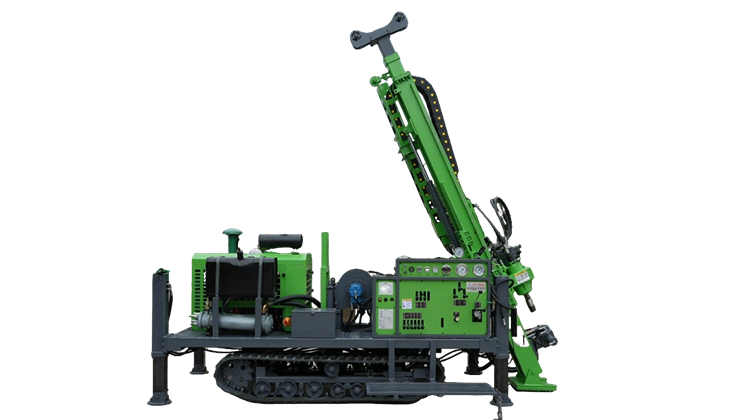
Mobility has a direct effect on both capital cost and field productivity. Crawler water well drilling rigs provide good site access and fast repositioning on uneven ground. Truck-mounted units can be efficient for contractors covering long distances, subject to local road and registration rules. Trailer and portable water well drilling rigs may suit smaller holes, restricted access, or lower transport capacity.
Choose the mobility platform for the real route to the drilling location, not just the main road. Site gradients, soft ground, bridge limits, gate width, and crane availability all affect the practical choice.
5. Engine, hydraulic system, and local serviceability
Engine power and emissions configuration influence price and the ability to register or operate the equipment in the destination market. Fuel quality, ambient temperature, altitude, and local parts availability should also be considered. Standardized hydraulic components and clearly documented maintenance points can reduce the lifetime cost of ownership, even if the initial purchase price is not the lowest.
6. Air compressor or mud pump requirements
For DTH work, compressor pressure and air volume must match the hammer size, depth, altitude, and expected water inflow. An undersized compressor can reduce penetration and cuttings removal. An oversized compressor may add unnecessary fuel consumption and transport weight. For mud drilling, pump flow and pressure must support the planned hole diameter and circulation system.
Always ask whether the compressor or mud pump is included in the quotation, recommended as a separate unit, or expected to be supplied locally.
7. Drill rods, bits, hammers, and casing tools
The start-up tooling package is a meaningful part of the budget. Rod diameter and thread, bit type, DTH hammer size, casing system, adapters, and fishing tools should match the rig and formation. Review available drill rods and drill bits as a system rather than purchasing components independently without checking compatibility.
8. Automation, rod handling, and safety features
Hydraulic rod handling, automatic breakout functions, remote control, centralized lubrication, guarding, emergency stops, and interlocks can raise the acquisition cost. They may also reduce crew size, improve consistency, and lower exposure to manual handling hazards. The value depends on local labor cost, operating hours, safety requirements, and the number of boreholes planned.
9. Documentation, training, warranty, and spare-parts support
A machine is only productive when operators can use it correctly and replacement parts can be identified quickly. Confirm the language and scope of the manuals, hydraulic and electrical diagrams, maintenance schedule, commissioning support, warranty terms, remote troubleshooting process, and recommended spare-parts list. These items are part of the product value, not administrative extras.
Look beyond purchase price: calculate total cost of ownership
Total cost of ownership gives a more useful comparison than the base price. Build a simple estimate for the expected ownership period using the following categories:
- Acquisition: rig, compressor or pump, tooling, options, taxes, and financing.
- Logistics: packing, sea or land freight, insurance, port charges, inland transport, and unloading.
- Operation: diesel, lubricants, drilling fluids, water, labor, and site preparation.
- Consumables: bits, hammers, rods, seals, filters, hoses, and wear parts.
- Maintenance: scheduled service, repairs, technician travel, and inventory carrying cost.
- Downtime: lost production while waiting for parts, tools, or technical support.
- Residual value: expected resale or remaining service value at the end of the period.
Divide the estimated lifetime cost by the realistic number of completed meters or boreholes. This exposes the difference between a low-priced machine and a productive, supportable drilling system.
Information to provide when requesting a quotation
A detailed project brief helps the manufacturer avoid an oversized or undersized recommendation. Include:
- Country and specific operating region.
- Typical and maximum target depth.
- Required finished hole diameter and casing sizes.
- Known geology or a nearby borehole log.
- Preferred method: mud rotary, air/DTH, or a combined approach.
- Expected holes or drilling meters per month.
- Site access, slope, ground bearing condition, and transport limits.
- Available compressor, mud pump, support truck, crane, and power supply.
- Local engine emissions requirements and preferred fuel.
- Required tooling, spare parts, training, and delivery deadline.
You can compare current configurations in our drilling rig product range. For a broader selection process, see how to choose a drill rig for a water well project.
Buyer checklist before placing an order
- Confirm the recommended drilling method against actual geology.
- Verify working depth, diameter, torque, pullback, and rod specifications.
- Match the compressor or pump to the complete drilling system.
- Check transport dimensions, weight, and local access constraints.
- Request an itemized scope for tools, options, spares, and services.
- Review manuals, training, warranty, and parts response procedures.
- Calculate cost per meter or per completed well, not just purchase price.
- Agree on inspection, test, packing, and delivery documentation.
Frequently asked questions
Why do water well drilling rig prices vary so much?
Prices vary because depth rating is only one specification. Drilling method, torque, pullback, mobility, engine, compressor or mud pump, automation, tooling, documentation, and support can all change the scope and cost.
Is a deeper drilling rig always the better choice?
No. Excess capacity can add fuel use, weight, transport complexity, and purchase cost. The best rig provides a sensible working margin for the actual depth, diameter, geology, and production target.
Should the air compressor be purchased with the rig?
It can be supplied together or sourced separately, but its pressure and air volume must be matched to the hammer, hole diameter, depth, altitude, and water inflow. Confirm compatibility before ordering either unit.
How can I receive a more accurate quotation?
Provide the destination, depth, bore diameter, geology, preferred drilling method, site access, production target, existing support equipment, tooling needs, and service expectations. The more complete the brief, the more precise the configuration and quotation.
Choose the configuration, not just the price
The most economical water well drilling rig is the one that matches the formation, completes the required boreholes consistently, can be transported and maintained locally, and receives dependable parts support. Send Feiyang your project parameters through the contact page for a configuration-based recommendation and itemized quotation.