


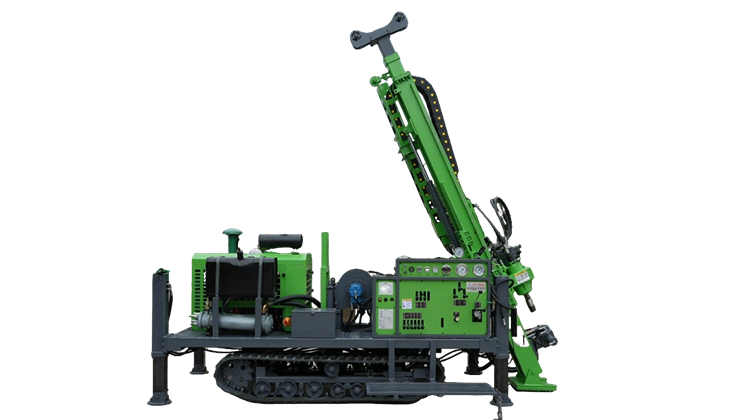

Industry Outlook: The Drilling Rig Equipment Sector and Its Future Prospects
2026-03-28


The drilling rig equipment industry plays a crucial role in multiple sectors—including construction, water well development, mining, geological exploration, and energy extraction. As infrastructure development accelerates worldwide and demand for subsurface resources continues to rise, advanced drilling solutions have become indispensable tools for engineers, surveyors, and project developers. Below is a comprehensive analysis of the current state of the drilling rig industry and where it’s headed.
1. Market Growth and Size
The global drilling rig market has exhibited steady expansion and is expected to continue growing at a moderate pace over the next decade. According to recent industry forecasts, the overall market was valued at approximately USD 83.58 billion in 2024 and is projected to reach USD 138.61 billion by 2033, representing a compound annual growth rate (CAGR) of about 6.0% from 2025 to 2033.
Key segments such as onshore drilling maintain dominant revenue share, driven by shale, conventional oil & gas exploration, and land-based subsurface projects. Meanwhile, offshore and deepwater projects are gaining traction as technology and energy investment strategies evolve.
2. Demand Drivers Across Industries
Infrastructure and Construction Expansion
Large-scale infrastructure projects—such as tunnels, bridges, and urban foundations—place strong demand on various drilling technologies. Water well drilling, for example, remains a staple in municipal and agricultural projects globally, especially in regions with expanding rural development requirements.
Resource Exploration and Energy Security
While global energy markets face cyclical volatility, the need for reliable energy supplies continues to drive exploration activity. Investments in deepwater drilling rigs and geotechnical exploration support the long-term search for hydrocarbons and critical minerals.
Urbanization and Geotechnical Needs
Rapid urban development requires precise subsurface data, pushing demand for specialized drilling equipment capable of detailed geological sampling, core recovery, and stable hole alignment.
3. Technological Trends and Innovation
Automation and Digital Integration
Advanced drilling rigs are increasingly incorporating automation, real-time monitoring, and predictive analytics—enhancing operational efficiency, safety, and uptime. Digital twin technologies and sensor networks allow operators to simulate drilling conditions and optimize performance before deployment, significantly reducing downtime and maintenance costs.
Sustainability and Emissions Reduction
Environmental regulation and corporate sustainability commitments are reshaping equipment design. Hybrid power systems, cleaner fuel technologies, and noise-reduction measures are now critical in new rig development—especially for sensitive ecological zones and densely populated areas.
Versatility and Modular Platforms
Demand for multi-functional rigs—capable of adapting to water well drilling, geological exploration, and construction tasks—continues to grow. These modular platforms provide flexibility, cost-efficiency, and wide application potential, accelerating their adoption across markets.
4. Regional Trends and Global Landscape
The Asia-Pacific region is among the fastest-growing markets due to rapid industrialization, infrastructure investment, and energy exploration activity. Regions like China, India, and Southeast Asia are experiencing increased drilling rig deployment across both onshore and offshore segments.
North America maintains a substantial market share, driven by large-scale exploration and technological leadership in drilling methods. Emerging markets in Africa and Latin America are also expanding, supported by resource exploration and infrastructure initiatives.
5. Challenges Facing the Industry
Despite solid growth fundamentals, the drilling rig market faces several challenges:
- Commodity Price Sensitivity: Exploration investment and rig utilisation are often tied to fluctuations in global oil and gas prices, which can affect demand cycles.
- Capital Intensity: High upfront costs for advanced rigs and technology upgrades may push smaller companies to delay investments.
- Environmental and Regulatory Pressure: Stricter regulations around emissions and land use require ongoing design innovation and compliance costs.
6. Strategic Outlook and Long-Term Opportunities
Looking ahead, the drilling rig equipment sector is positioned for sustained, diversified growth. Key opportunities lie in:
- Hybrid and emission‑controlled drilling solutions
- AI and automation integration for predictive maintenance
- Enhanced productivity through modular and multi‑use rigs
- Expansion into new exploration frontiers and renewable energy applications
The industry’s ability to adapt technology, meet environmental expectations, and serve emerging markets will define its future growth trajectory.
Conclusion
The drilling rig industry is maturing into a more versatile, tech-driven sector that underpins global construction, exploration, and resource extraction efforts. For equipment manufacturers and solution providers, the focus on innovation, market adaptability, and sustainable practices will be essential for competitive advantage in the decade ahead.
Whether addressing foundational infrastructure needs or supporting complex geological investigations, drilling rigs remain at the heart of subsurface development—a position that promises resilience and opportunity in the years to come.